Homeowner field guide • 2 minute read
What to Do After a Suspected Chimney Fire
An emergency-first checklist followed by a disciplined inspection, documentation and return-to-use process.
By Chimney Sweep USA Online editorial team · Updated · Prepared with AI assistance; no professional technical review claimed.
During a possible event
Get everyone out and call emergency services. Do not remain inside to investigate, climb onto the roof, open hot components or attempt a repair. Follow the dispatcher’s instructions and do not re-enter until authorities say it is safe. A roaring sound, visible flames, smoke, alarm or unusual odor can have several causes, but an active incident is not the time to diagnose them.
Keep the system out of use
After the immediate event, do not relight the fireplace, stove or connected appliance. A brief event can affect liners, joints, surrounding construction or connected components in ways not visible from the room. Preserve the scene where practical and follow instructions from the fire department, insurer or relevant authorities. Do not clean away deposits or damaged material before the assessment unless required for safety.
Create an accurate incident packet
Record the date, appliance, fuel, observations, alarm activation, emergency response and any instructions given. Collect photographs only from safe, permitted locations. Save the fire report number, prior chimney service records and appliance details. Separate firsthand observations from assumptions. This packet helps the inspector understand the event and helps avoid retelling different versions to companies and insurers.
Request event-appropriate inspection
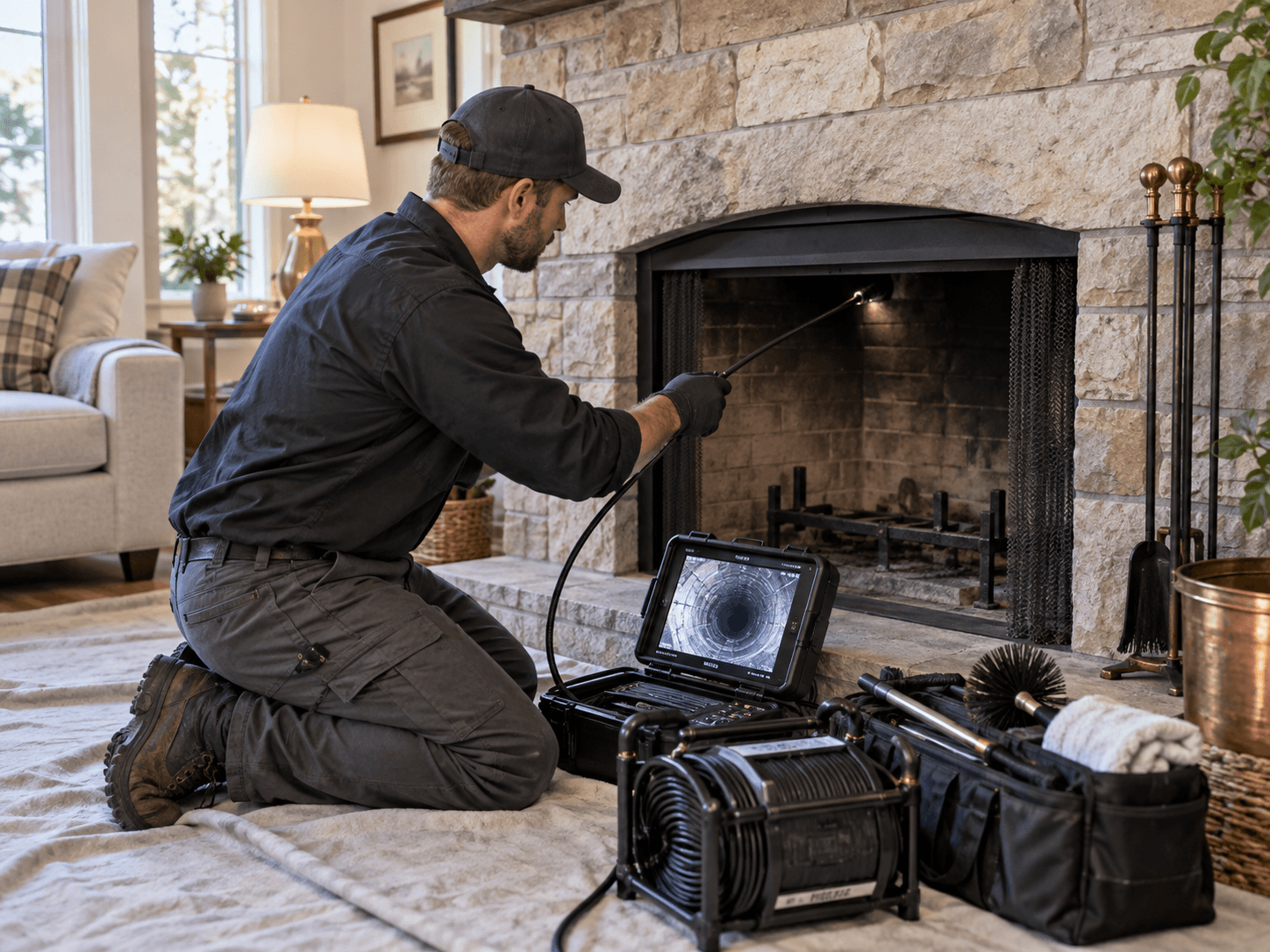
Tell the chimney company there was a suspected fire and ask what inspection scope is appropriate. Confirm which flue, appliance, accessible spaces and camera work are included, along with limitations. The goal is not merely to remove deposits; it is to assess documented effects and determine next steps. If areas cannot be evaluated, ask what further access or specialist input is needed.
Handle repair and insurance tracks carefully
Ask the inspector to connect each proposed repair to a documented finding. Preserve estimates, photographs and communications, and follow insurer requirements before authorizing non-emergency changes where applicable. The directory does not interpret policies or determine coverage. For substantial work, another qualified opinion may help clarify diagnosis and scope. Keep any use restriction in force throughout the decision.
Return to use only after clear closeout
Collect repair completion records, product information, applicable permits or inspections and the responsible professional’s statement about remaining restrictions. Do not use a trial fire as your own final test. Update the maintenance passport with the incident, documents and next recommended review. Retain the pre-event report if available; comparison over time can be valuable to future professionals.
Put the guide to work
Build a service request with consistent questions, compare chimney contractors, then record the outcome in your maintenance passport. For unfamiliar component names, use the chimney glossary.
Evidence and further reading
These primary and clearly identified industry resources support the maintenance and inspection context. Source links were checked during the editorial review dated above. Our quote worksheets and planning examples are original editorial guidance; local requirements and appliance instructions control for the actual installation.
- Chimney Safety Institute of America: homeowner FAQs
Inspection frequency, cleaning scope and deposit guidance.
- U.S. Fire Administration: heating fire safety
Home heating maintenance and combustible-material precautions.
- CSIA: chimney inspection levels explained
Scope distinctions between inspection levels; this is an older explanatory resource, not a local code determination.
- U.S. Consumer Product Safety Commission: home heating equipment
Carbon-monoxide prevention and yearly professional inspection guidance for fuel-burning heating systems, chimneys, flues and vents.
- USAGov: state consumer protection offices
Official directory for finding state offices that assist with business complaints and consumer issues.
Read our methodology, check the review register, or request a correction.