Homeowner field guide • 3 minute read
The Year-Round Chimney Maintenance Calendar
A four-season planning guide for inspections, records, weather exposure and appliance changes.
By Chimney Sweep USA Online editorial team · Updated · Prepared with AI assistance; no professional technical review claimed.
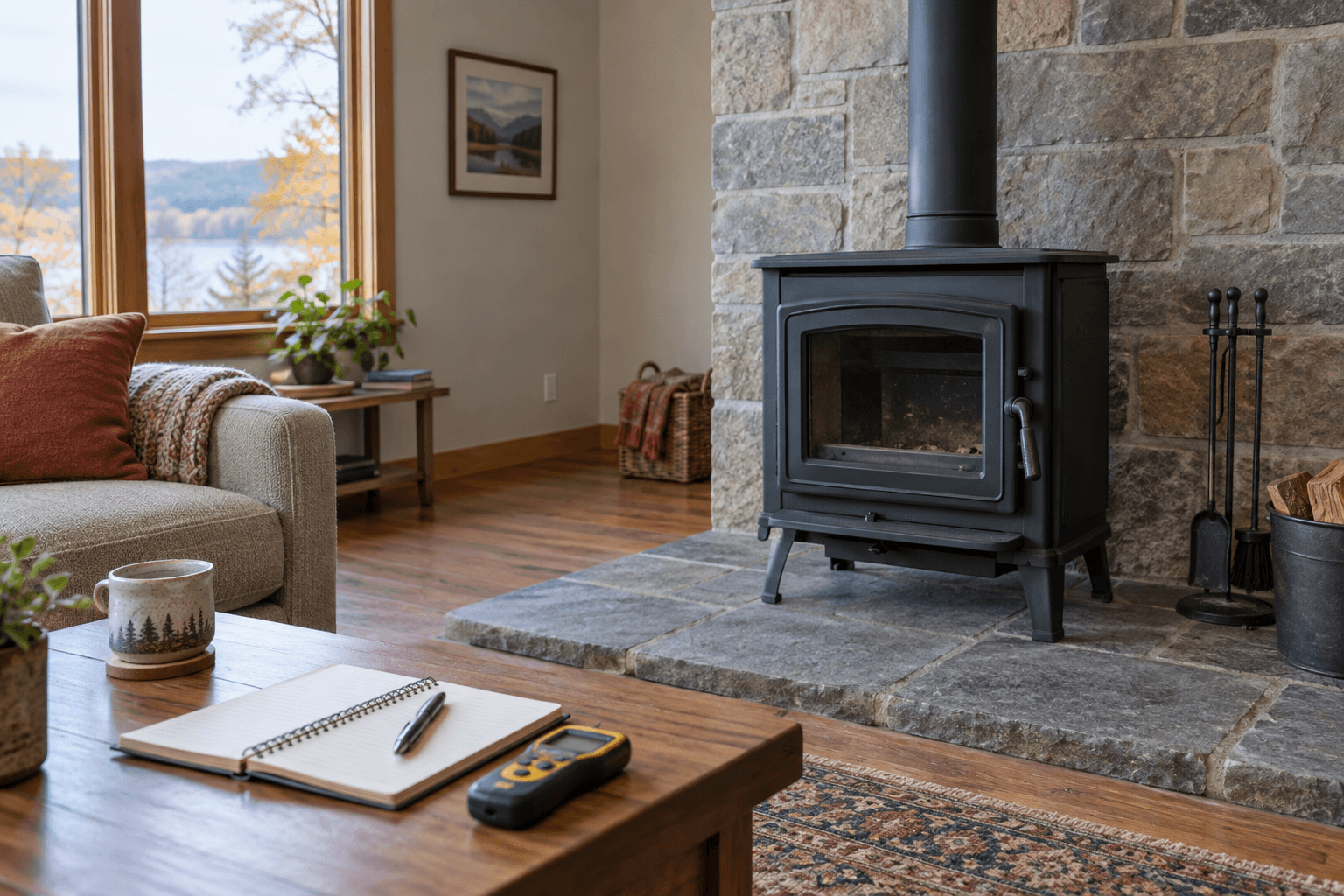
Late winter: record, do not postpone
Note smoke, odor, water, unusual deposits, alarm events and changes in appliance behavior while the season is still fresh in memory. Stop use and seek assessment when an unsafe condition is suspected. File fuel notes and service documents. Do not wait for a preferred season when there is an active restriction or hazard. The calendar is for planned maintenance, not for delaying a safety response.
Spring: investigate weather exposure
From the ground or another safe location, note visible changes after freeze, rain or storms. Record indoor staining and when it appears. Arrange assessment for masonry, crown, cap, chase cover or flashing concerns without climbing or attempting a hose test. Spring scheduling may provide time to diagnose and plan work before the next heating season, but suitable weather and material conditions remain the contractor’s responsibility.
Summer: compare planned repairs
Use the written inspection to request aligned scopes. Verify company details, insurance and relevant credentials; clarify access, materials, permits, roof restoration and completion evidence. Preserve before photographs and authorize changes in writing. If you are replacing an appliance or changing fuel, arrange system evaluation early because compatibility and venting questions can affect the project. Do not treat a repair season as a universal deadline.
Early fall: confirm readiness
Locate the latest report, close unresolved items and book inspection or sweeping based on professional recommendations and use history. Test and maintain smoke and carbon-monoxide alarms according to their manufacturers and local requirements. Review the appliance instructions and confirm that the household understands restrictions. Avoid discovering on the first cold night that access, parts or follow-up work are still needed.
During use: keep a light-touch log
Record approximate use, fuel changes and unusual events without turning the home into a laboratory. For cordwood, follow the appliance instructions and appropriate dry-fuel guidance. Do not conduct smoke or draft experiments. A concise log helps a professional interpret change, while alarm activation, indoor smoke or a suspected fire requires immediate response and discontinued use rather than another entry.
Annual record review
Once a year, check that each appliance has an identity, latest service date, report reference, unresolved actions and company contact. Remove obsolete reminders but retain historical reports. Verify that directory and credential information is still current before hiring again. The maintenance passport stores organizational notes in the browser; maintain original reports elsewhere. A complete record improves the next conversation but does not certify safety.
Put the guide to work
Build a service request with consistent questions, compare chimney contractors, then record the outcome in your maintenance passport. For unfamiliar component names, use the chimney glossary.
Evidence and further reading
These primary and clearly identified industry resources support the maintenance and inspection context. Source links were checked during the editorial review dated above. Our quote worksheets and planning examples are original editorial guidance; local requirements and appliance instructions control for the actual installation.
- Chimney Safety Institute of America: homeowner FAQs
Inspection frequency, cleaning scope and deposit guidance.
- U.S. Fire Administration: heating fire safety
Home heating maintenance and combustible-material precautions.
- CSIA: chimney inspection levels explained
Scope distinctions between inspection levels; this is an older explanatory resource, not a local code determination.
- U.S. Consumer Product Safety Commission: home heating equipment
Carbon-monoxide prevention and yearly professional inspection guidance for fuel-burning heating systems, chimneys, flues and vents.
- USAGov: state consumer protection offices
Official directory for finding state offices that assist with business complaints and consumer issues.
Read our methodology, check the review register, or request a correction.