Homeowner field guide • 3 minute read
Creosote: What Homeowners Need to Know
A careful guide to deposits, professional cleaning conversations and the limits of visual checks.
By Chimney Sweep USA Online editorial team · Updated · Prepared with AI assistance; no professional technical review claimed.
What the word describes
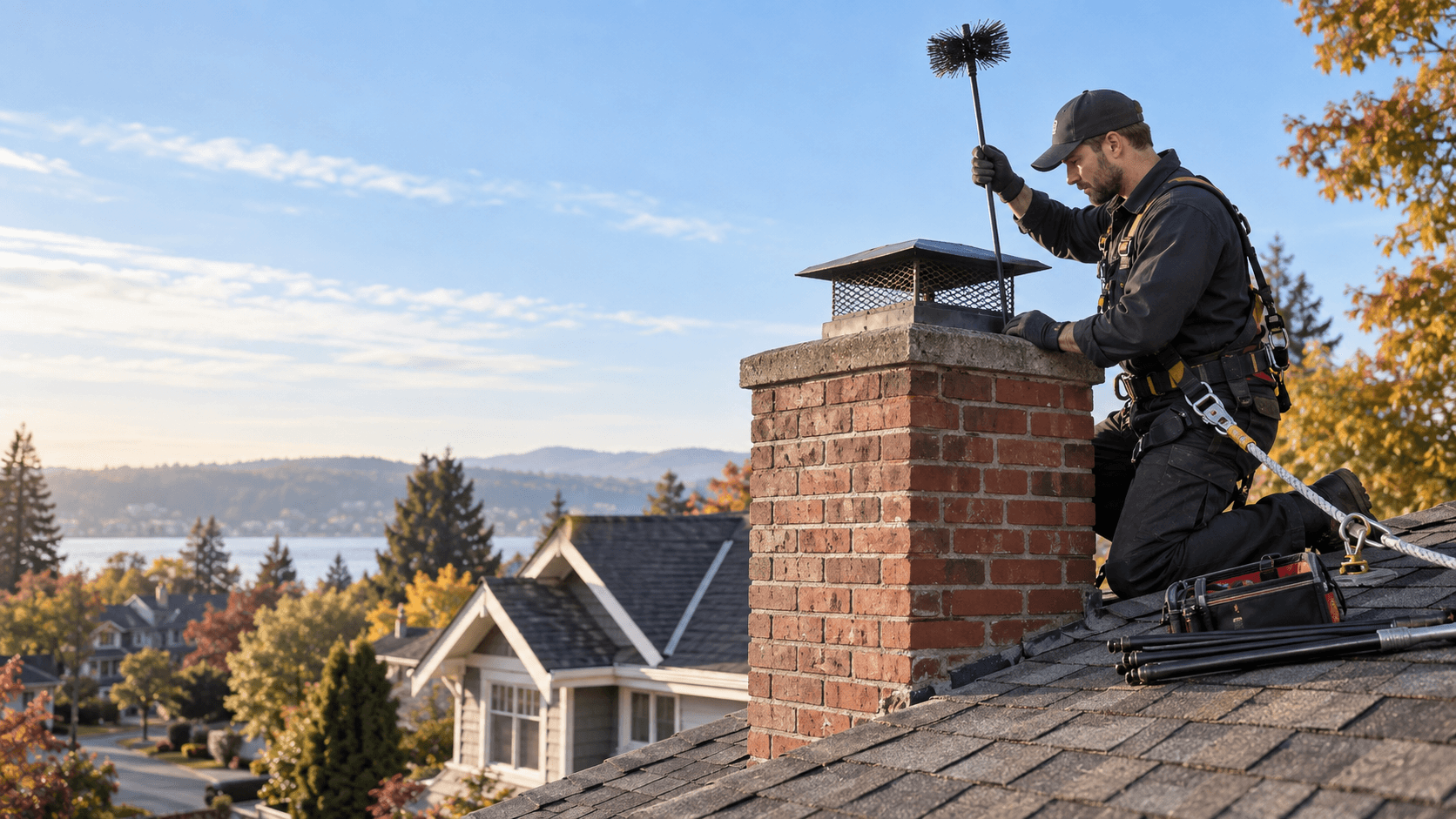
Creosote is a combustible byproduct associated with wood combustion that can accumulate in the venting path. It may appear in different textures and locations, but a homeowner view from the firebox does not reveal the entire flue. Soot, ash and other debris may also be present. Do not scrape, burn or chemically treat an unknown deposit as a way to identify it. Ask a chimney professional to assess the system and explain what was observed.
Why a calendar alone is incomplete
Annual inspection is a common safety recommendation, while cleaning is performed when conditions warrant it. How quickly deposits accumulate can vary with appliance, fuel, operation, venting and use. ‘Once a year’ should not be interpreted as permission to continue use despite a suspected problem, nor as proof that cleaning is always required on the same date. Keep use history and prior reports so the professional can evaluate the actual system rather than rely on a universal interval.
Questions for the sweep
Ask where the deposit is, how its amount and character were determined, which removal method is proposed, what parts of the system are included and whether follow-up evaluation is needed. Request before-and-after context for significant findings where practical. Clarify whether a treatment is intended to condition deposits for later removal rather than complete the job immediately. Products and methods do not replace an inspection of the venting system.
Factors worth recording
For cordwood, note fuel source, storage and any moisture readings taken according to the meter instructions. Record how often the appliance is used and any change in startup, draft or smoke behavior. Do not deliberately recreate a concern. This information is background for the professional, not a homeowner formula for predicting deposit thickness or fire risk. Follow the appliance manufacturer’s operating instructions and the provider’s restrictions.
After a suspected chimney fire
If a chimney fire may be active, leave and call emergency services. After any suspected event, keep the appliance out of use and arrange a qualified assessment before relighting it. Report sounds, flames, smoke, alarm activation and the emergency response without climbing to inspect the top. A system can be damaged even when the event seemed brief. Preserve service and emergency records for the inspector.
Document cleaning precisely
The closeout should identify the appliance and flue, areas cleaned, areas inspected, limitations, findings and next action. Save the report with the invoice and add the date to the Chimney Passport. Avoid reducing the result to ‘passed’ unless the professional explicitly defines that term and scope. Cleaning addresses deposits; it does not guarantee the condition of every component or concealed area.
Put the guide to work
Build a service request with consistent questions, compare chimney contractors, then record the outcome in your maintenance passport. For unfamiliar component names, use the chimney glossary.
Evidence and further reading
These primary and clearly identified industry resources support the maintenance and inspection context. Source links were checked during the editorial review dated above. Our quote worksheets and planning examples are original editorial guidance; local requirements and appliance instructions control for the actual installation.
- Chimney Safety Institute of America: homeowner FAQs
Inspection frequency, cleaning scope and deposit guidance.
- U.S. Fire Administration: heating fire safety
Home heating maintenance and combustible-material precautions.
- CSIA: chimney inspection levels explained
Scope distinctions between inspection levels; this is an older explanatory resource, not a local code determination.
- U.S. Consumer Product Safety Commission: home heating equipment
Carbon-monoxide prevention and yearly professional inspection guidance for fuel-burning heating systems, chimneys, flues and vents.
- USAGov: state consumer protection offices
Official directory for finding state offices that assist with business complaints and consumer issues.
Read our methodology, check the review register, or request a correction.