Homeowner field guide • 3 minute read
How to Prepare for a Chimney Sweep or Inspection
A room-by-room appointment checklist that protects the home, preserves useful evidence and prevents scope surprises.
By Chimney Sweep USA Online editorial team · Updated · Prepared with AI assistance; no professional technical review claimed.
Three days before: identify the system
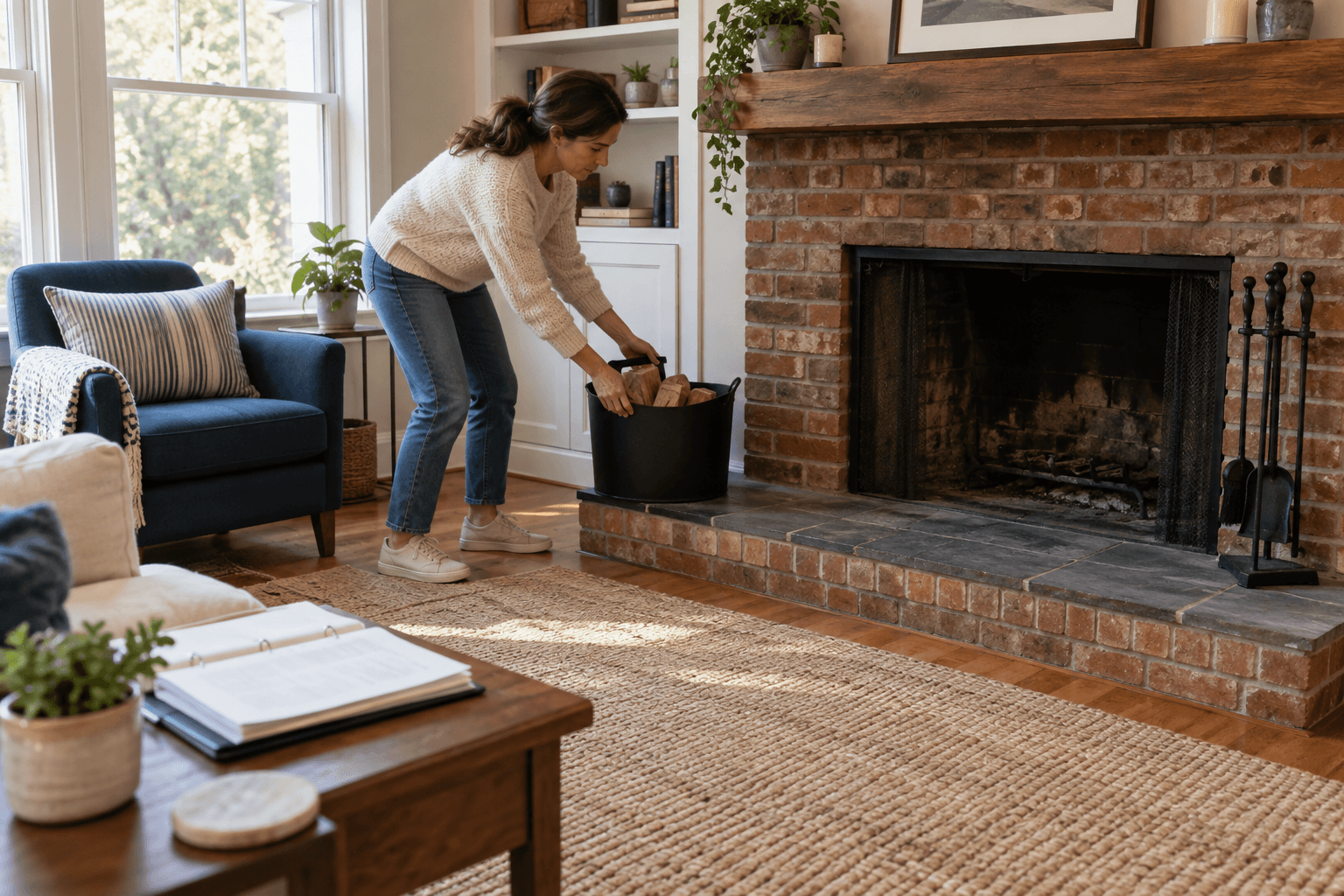
Write down every fireplace, stove, insert or heating appliance you expect the visit to cover. One masonry stack can contain several separate flues, so a quote for ‘the chimney’ may not include every appliance. Find model information where it is safely accessible, collect previous reports and tell the company about known restrictions. Confirm whether the appointment is cleaning, inspection, camera scanning or a combination. Ask what is excluded and whether roof, attic, basement or cleanout access will be needed.
The day before: stop use and preserve clues
Follow the contractor’s cooling-time instructions and do not use the appliance once that period begins. Leave unusual flakes, staining or debris in place when they are part of the concern; photograph them without climbing or disturbing the system. Record when smoke, odor, water or an alarm occurred. Secure pets and plan a clear route between the entrance and work area. Move fragile objects, but do not dismantle an insert, connector or appliance unless a qualified provider specifically directs and performs that work.
Prepare the room without hiding the problem
Remove ash only if the company asks you to and the material is completely cold. Clear the mantel and nearby floor while leaving the firebox, doors and controls as normally configured. Tell the technician about fresh paint, vulnerable flooring or other surfaces that need protection. Do not apply deodorizer, sealant or cleaner immediately before an odor or leak investigation. The goal is safe access and an accurate starting condition—not making the system appear cleaner than it is.
Use a two-minute arrival briefing
Show the technician which system is included, provide the symptom timeline and point out relevant reports. Confirm the authorized scope, documentation and price before work begins. Ask who may approve additional work if a new condition is found. If the company is sending a different person from the estimator, make sure the work order still matches your understanding. Keep the briefing factual: what happened, when it happened and what changed. Diagnosis belongs to the on-site professional.
Close the appointment with five answers
Ask what was cleaned, what was inspected, which areas were inaccessible, whether any use restriction applies and what the next action is. Request photographs or report references for significant findings and distinguish urgent work from maintenance that can be scheduled. Save the invoice, report, company name, appliance identity and date together. An invoice proves the listed service occurred; it does not establish that every concealed condition was evaluated. Add unresolved items to the Chimney Passport rather than relying on memory.
Printable appointment checklist
System identified; appointment scope confirmed; appliance cool; access route clear; pets secured; old reports ready; symptom timeline written; surfaces discussed; extra-work approval process agreed; findings and limitations collected. Print this page or copy those items into your service brief. For an active fire, smoke accumulation, gas odor or carbon-monoxide alarm, leave the building and contact emergency services or the utility as appropriate instead of preparing for an ordinary service appointment.
Put the guide to work
Build a service request with consistent questions, compare chimney contractors, then record the outcome in your maintenance passport. For unfamiliar component names, use the chimney glossary.
Evidence and further reading
These primary and clearly identified industry resources support the maintenance and inspection context. Source links were checked during the editorial review dated above. Our quote worksheets and planning examples are original editorial guidance; local requirements and appliance instructions control for the actual installation.
- Chimney Safety Institute of America: homeowner FAQs
Inspection frequency, cleaning scope and deposit guidance.
- U.S. Fire Administration: heating fire safety
Home heating maintenance and combustible-material precautions.
- CSIA: chimney inspection levels explained
Scope distinctions between inspection levels; this is an older explanatory resource, not a local code determination.
- U.S. Consumer Product Safety Commission: home heating equipment
Carbon-monoxide prevention and yearly professional inspection guidance for fuel-burning heating systems, chimneys, flues and vents.
- USAGov: state consumer protection offices
Official directory for finding state offices that assist with business complaints and consumer issues.
Read our methodology, check the review register, or request a correction.