Homeowner field guide • 3 minute read
How to Read a Chimney Inspection Report
Translate photographs, limitations and repair recommendations into an evidence-based homeowner decision.
By Chimney Sweep USA Online editorial team · Updated · Prepared with AI assistance; no professional technical review claimed.
Start with identity and scope
Confirm that the report names the property, appliance, flue and inspection level or agreed scope. A home with two fireplaces can have findings that apply to only one venting path. Look for the areas examined, tools used and date. Then find the limitations: weather, deposits, inaccessible rooms or concealed construction may restrict what could be observed. ‘Not visible’ does not mean either defective or safe. Ask whether a limitation prevents the report from answering the reason you ordered it.
Separate observation from interpretation
An observation states what the inspector saw and where: a gap at a tile joint, staining below flashing or corrosion on a chase cover. Interpretation explains why that condition may matter. A recommendation proposes a response. Mark these three parts separately when the report blends them together. Ask for plain-language clarification when a repair is proposed without a location or supporting observation. This approach helps you compare diagnoses, not merely compare the prices of different solutions.
Put photographs back into context
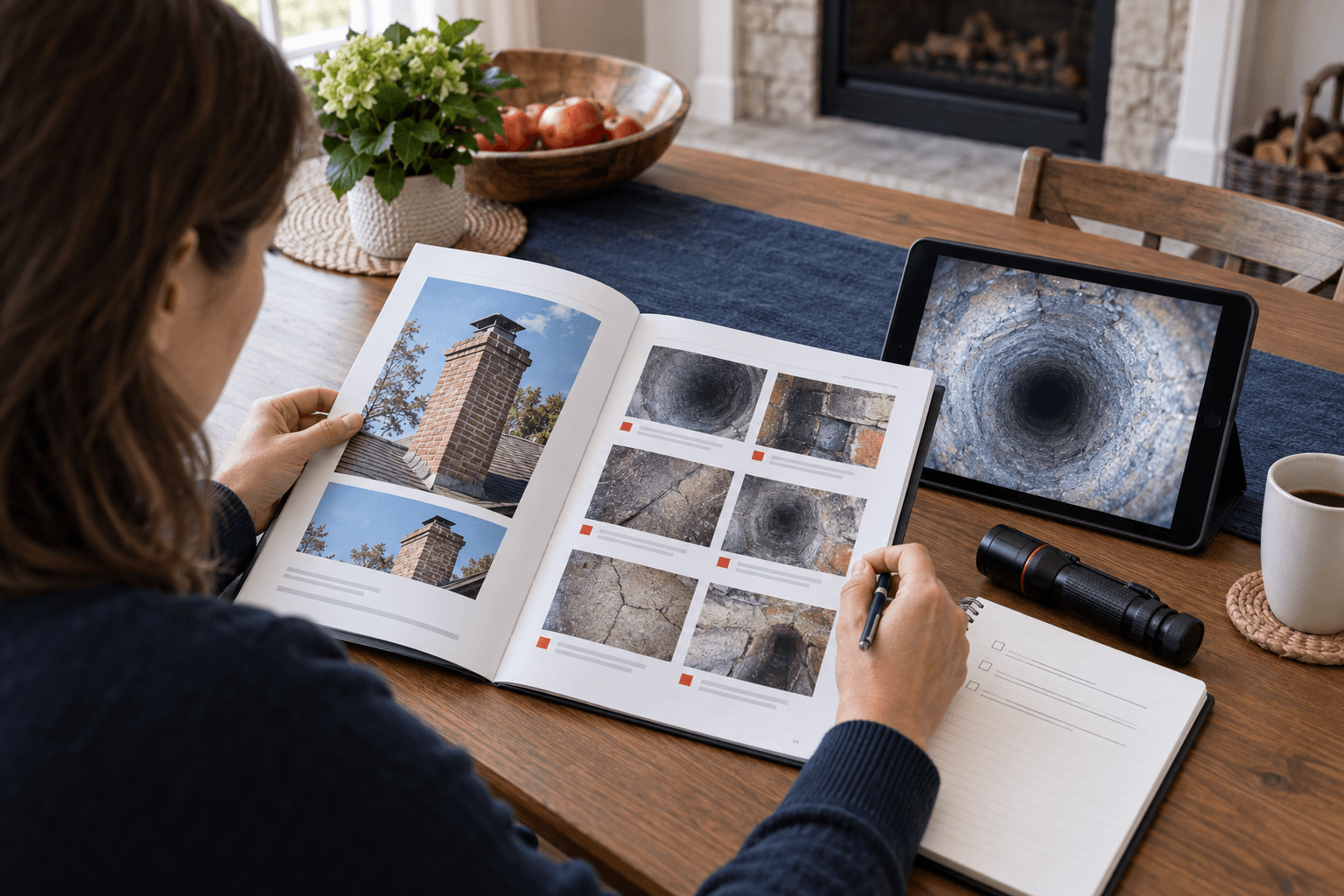
A useful image is associated with a particular flue, direction and approximate location. Perspective, deposits and camera lighting can make size difficult to judge, so avoid measuring a defect from an unscaled photograph. Ask the inspector to label the component and explain what the image demonstrates. If cleaning was needed before evaluation, confirm whether the photograph is from before or after cleaning. Store images with the written report so they do not become disconnected from their explanation.
Create four priority lanes
Sort each recommendation into: stop-use or immediate safety response; near-term corrective work; planned maintenance; or monitor and document. These categories are an organizational tool, not a substitute for the inspector’s directions. Ask the professional to state any use restriction explicitly and what must happen before it can be lifted. For a major repair, request the evidence, proposed method, materials, access, permits where applicable and completion documentation. A second qualified opinion can help when scope or diagnosis remains uncertain.
Questions that expose an incomplete proposal
Which observed condition does this work address? Where is it? What remains concealed? Is the proposal compatible with the appliance and fuel? What is included at the roof, interior and cleanup stages? What would cause a change order? How will completion be documented? Ask the same questions of each company. A lower total may simply omit access, restoration, imaging or another flue. Compare aligned scopes before comparing prices.
Build the permanent record
Retain the original report even after repair. Pair it with the signed scope, invoice, product information, photographs and applicable permit or inspection records. Record unresolved findings and the next recommended review in the Chimney Passport, while storing the actual files in your own secure location. If the home is sold, this history can explain what was observed and completed. It still does not warrant the present condition; a future professional must assess the system as it exists then.
Put the guide to work
Build a service request with consistent questions, compare chimney contractors, then record the outcome in your maintenance passport. For unfamiliar component names, use the chimney glossary.
Evidence and further reading
These primary and clearly identified industry resources support the maintenance and inspection context. Source links were checked during the editorial review dated above. Our quote worksheets and planning examples are original editorial guidance; local requirements and appliance instructions control for the actual installation.
- Chimney Safety Institute of America: homeowner FAQs
Inspection frequency, cleaning scope and deposit guidance.
- U.S. Fire Administration: heating fire safety
Home heating maintenance and combustible-material precautions.
- CSIA: chimney inspection levels explained
Scope distinctions between inspection levels; this is an older explanatory resource, not a local code determination.
- U.S. Consumer Product Safety Commission: home heating equipment
Carbon-monoxide prevention and yearly professional inspection guidance for fuel-burning heating systems, chimneys, flues and vents.
- USAGov: state consumer protection offices
Official directory for finding state offices that assist with business complaints and consumer issues.
Read our methodology, check the review register, or request a correction.