Homeowner field guide • 3 minute read
Returning an Unused Fireplace to Service
A safe decision path for a fireplace with an unknown history, long idle period or recent property transfer.
By Chimney Sweep USA Online editorial team · Updated · Prepared with AI assistance; no professional technical review claimed.
Do not make the first fire the test
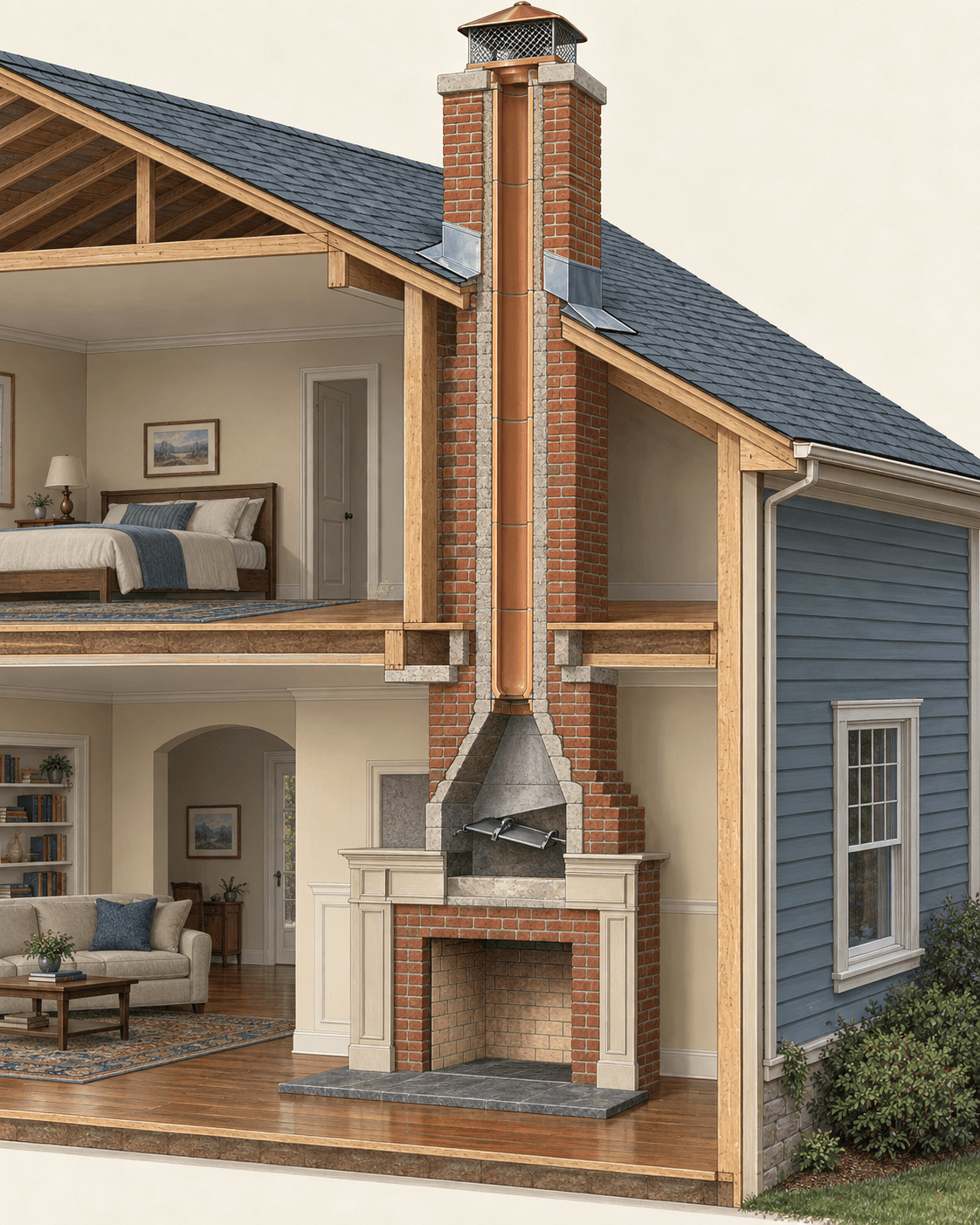
An unused fireplace can contain deposits, nesting material, deterioration, disconnected components or alterations that are not visible from the room. A small trial fire cannot establish safe venting and can create a real emergency. Start by identifying the appliance and fuel, collecting prior records and arranging an appropriate professional assessment. If you do not know when it was last used, say so. Uncertainty is useful information and should shape the inspection scope.
Reconstruct the system history
Look for invoices, inspection reports, permits, appliance manuals and model labels that can be reached without dismantling anything. Ask previous owners what they know, but label recollections separately from documents. Note roof work, remodeling, fuel conversion, an installed insert or changes to exhaust equipment. A chimney that looks original outside may have been altered inside. Give the chronology to the contractor and ask which facts can be verified during the visit.
Match the inspection to the decision
Tell the company that the system has been idle and that you want to determine what must happen before use. Ask which inspection scope is suitable and whether cleaning or camera scanning may be needed to see the flue. Confirm access to the roof, attic, basement, cleanout and appliance. If concealed areas remain unresolved, request that the report say what could not be evaluated and whether that affects the use decision.
Treat the whole appliance-and-vent path as one system
The firebox or stove, connector, damper, smoke chamber, liner, exterior stack and termination all contribute to performance. Factory-built fireplaces also rely on listed, compatible components. Do not replace a cap, door or connector based only on appearance. Ask the professional to identify the system and check that proposed parts and clearances are appropriate. An attractive hearth and a recently repaired crown do not by themselves answer whether the venting path is ready for use.
Resolve findings before operation
Ask which conditions prohibit use, which are maintenance items and which are optional improvements. Obtain a written repair scope connected to the documented finding. For extensive work, consider another qualified assessment before committing. After repairs, collect completion records and ask whether reinspection or another verification is needed. Do not assume an invoice automatically lifts an earlier restriction; request a clear closeout statement from the responsible professional.
Establish the new baseline
Once a qualified provider says the system may be used, keep the report, repair records and appliance instructions together. Record the fuel, usage pattern and recommended service interval. Install and maintain smoke and carbon-monoxide alarms according to manufacturer instructions and local requirements. Use only the appliance and fuel as directed. A documented baseline makes later changes easier to recognize and gives the next contractor something stronger than ‘it worked last winter.’
Put the guide to work
Build a service request with consistent questions, compare chimney contractors, then record the outcome in your maintenance passport. For unfamiliar component names, use the chimney glossary.
Evidence and further reading
These primary and clearly identified industry resources support the maintenance and inspection context. Source links were checked during the editorial review dated above. Our quote worksheets and planning examples are original editorial guidance; local requirements and appliance instructions control for the actual installation.
- Chimney Safety Institute of America: homeowner FAQs
Inspection frequency, cleaning scope and deposit guidance.
- U.S. Fire Administration: heating fire safety
Home heating maintenance and combustible-material precautions.
- CSIA: chimney inspection levels explained
Scope distinctions between inspection levels; this is an older explanatory resource, not a local code determination.
- U.S. Consumer Product Safety Commission: home heating equipment
Carbon-monoxide prevention and yearly professional inspection guidance for fuel-burning heating systems, chimneys, flues and vents.
- USAGov: state consumer protection offices
Official directory for finding state offices that assist with business complaints and consumer issues.
Read our methodology, check the review register, or request a correction.