Homeowner field guide • 3 minute read
Wood-Stove and Chimney Maintenance Guide
Understand the stove, connector and chimney as one venting system and keep better service records.
By Chimney Sweep USA Online editorial team · Updated · Prepared with AI assistance; no professional technical review claimed.
Map the entire venting path
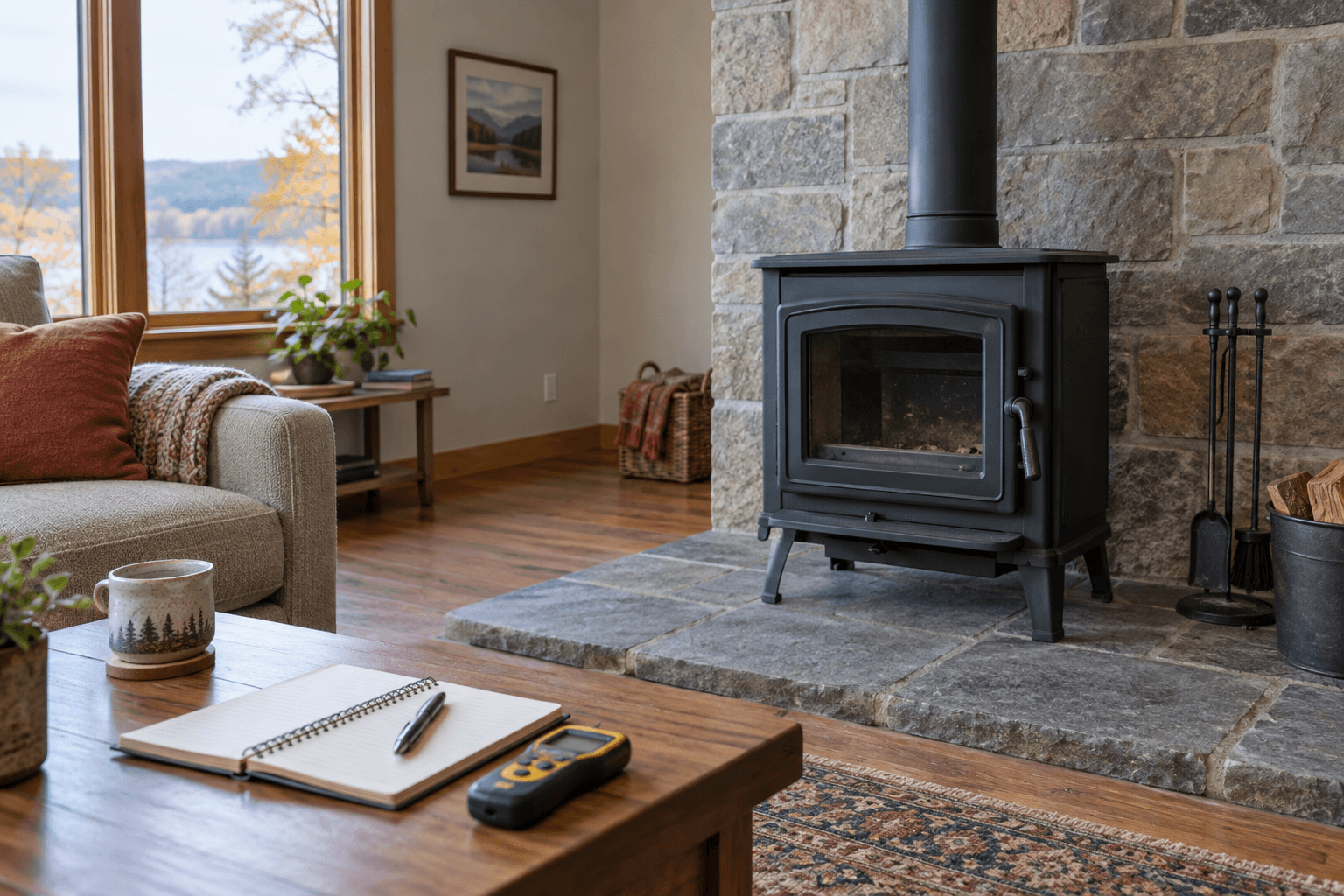
A freestanding stove may use connector pipe before entering a listed metal chimney or a lined masonry flue. Record the stove make and model, connector route, chimney type and where the transition occurs. Do not assume a sweep quote includes disassembly or reconnection of every connector. Ask which sections will be cleaned and inspected, who handles removable parts and what areas cannot be reached. The installation instructions are an essential reference when components or clearances are evaluated.
Fuel affects deposits, but does not replace inspection
Follow the stove manufacturer’s fuel instructions. For cordwood, EPA Burn Wise materials describe properly dried wood and moisture below 20 percent as useful operating guidance. A handheld reading varies with technique and sample, so retain it as a note rather than treating it as proof that the system is safe. Tell the sweep about fuel type, approximate use and any change in burning behavior. Deposit formation, appliance operation and system condition still require professional assessment.
Watch for changes, not internet diagnoses
Record new odor, smoke spillage, unusual sounds, visible connector changes, falling material or a carbon-monoxide alarm. Stop use when an unsafe condition is suspected, after a possible chimney fire or when directed by a professional. Do not reproduce a symptom for a video or attempt to inspect a hot or elevated component. A dated observation helps a contractor investigate; an online symptom list cannot identify the cause in your installation.
Make the service scope stove-specific
Ask whether the appointment covers the stove interior, baffle access, connector, chimney, termination and ash or debris handling. Some tasks are appliance-model dependent. Confirm inspection documentation, roof access and how the home will be protected. If a component must be removed, ask who is responsible for reassembly and verification. Compare estimates using the same system description and included sections rather than a generic ‘stove cleaning’ label.
When the stove or fuel changes
A replacement stove can change flue-sizing, liner, connector and draft requirements. Arrange an appropriate inspection and installation assessment rather than connecting a new appliance to an old path by assumption. Keep the new model information, listed components and installation records. The same caution applies to a fuel conversion. A chimney that served one appliance should not be presumed suitable for another without evaluation against the new system’s instructions and applicable requirements.
Create a season-to-season log
Record inspection and cleaning dates, provider, documented deposits, repairs, fuel notes and unresolved recommendations. Save photographs with their reports and note any change in appliance use. At the next visit, share the history and ask the professional to compare observations. The log can reveal change over time, but it is not a safety score. The current on-site condition and the qualified provider’s assessment remain decisive.
Put the guide to work
Build a service request with consistent questions, compare chimney contractors, then record the outcome in your maintenance passport. For unfamiliar component names, use the chimney glossary.
Evidence and further reading
These primary and clearly identified industry resources support the maintenance and inspection context. Source links were checked during the editorial review dated above. Our quote worksheets and planning examples are original editorial guidance; local requirements and appliance instructions control for the actual installation.
- Chimney Safety Institute of America: homeowner FAQs
Inspection frequency, cleaning scope and deposit guidance.
- U.S. Fire Administration: heating fire safety
Home heating maintenance and combustible-material precautions.
- EPA Burn Wise: best wood-burning practices
Fuel moisture and operating practices. Archived program guidance; EPA stopped updating Burn Wise in October 2025.
- CSIA: chimney inspection levels explained
Scope distinctions between inspection levels; this is an older explanatory resource, not a local code determination.
- U.S. Consumer Product Safety Commission: home heating equipment
Carbon-monoxide prevention and yearly professional inspection guidance for fuel-burning heating systems, chimneys, flues and vents.
- USAGov: state consumer protection offices
Official directory for finding state offices that assist with business complaints and consumer issues.
Read our methodology, check the review register, or request a correction.