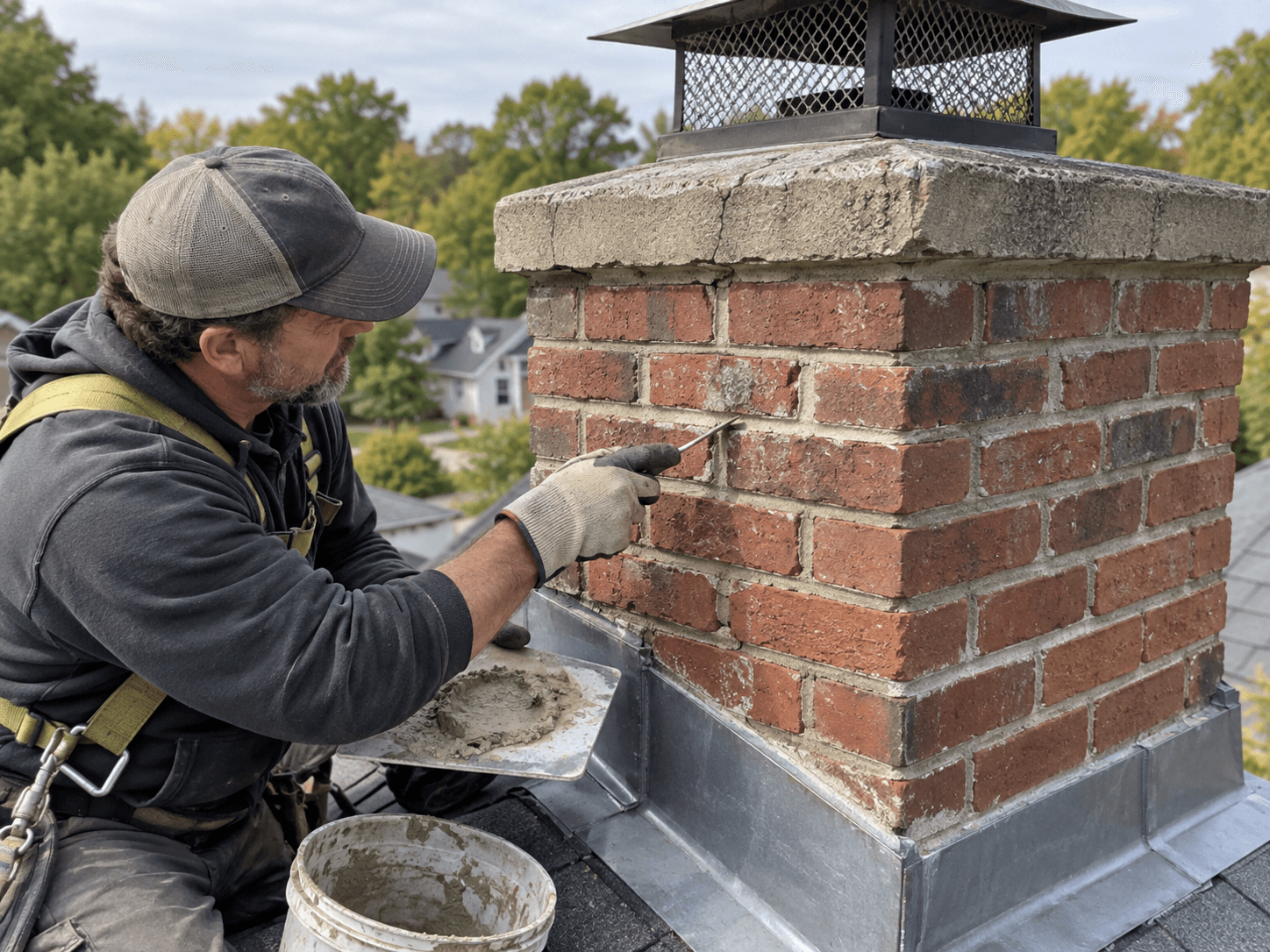
Brick faces flake, mortar joints open, stones move, or fragments appear on the roof or ground.
AI-generated editorial image; it does not diagnose a real property.Use decision
Keep people away from falling-material zones. A leaning, moving or actively shedding stack deserves prompt professional and possibly structural evaluation.
Not a diagnosis
Conditions a professional may investigate
Long-term water absorption and freeze-thaw exposure
Incompatible mortar or a failing prior coating
Crown, flashing or cap defects that admit water
Movement, settlement or structural distress
Build a timeline
What to document safely
Ground-level photographs from several dates and sides
Where fragments landed and whether damage is accelerating
Recent storms, impacts or building work
Interior attic or fireplace clues visible without unsafe access
A sensible sequence
Next steps
1
Do not climb or pull on loose masonry.
2
Move vehicles and people from the fall zone.
3
Seek a mason or chimney professional suited to the observed extent.
4
Ask whether structural engineering input is warranted.
Possible service path
Masonry and Chimney Crown Repair
Repair of deteriorated brick, mortar joints and the water-shedding top surface.
Several conditions can produce the same observation. An on-site assessment should test plausible causes and document limitations before a repair is selected.
Can I keep using the fireplace or appliance?
Keep people away from falling-material zones. A leaning, moving or actively shedding stack deserves prompt professional and possibly structural evaluation.
What should I photograph or record?
Ground-level photographs from several dates and sides Where fragments landed and whether damage is accelerating Recent storms, impacts or building work Interior attic or fireplace clues visible without unsafe access
What type of company should I contact?
Look for a company with relevant experience in masonry and chimney crown repair and your appliance type. Confirm services, qualifications and current insurance directly.