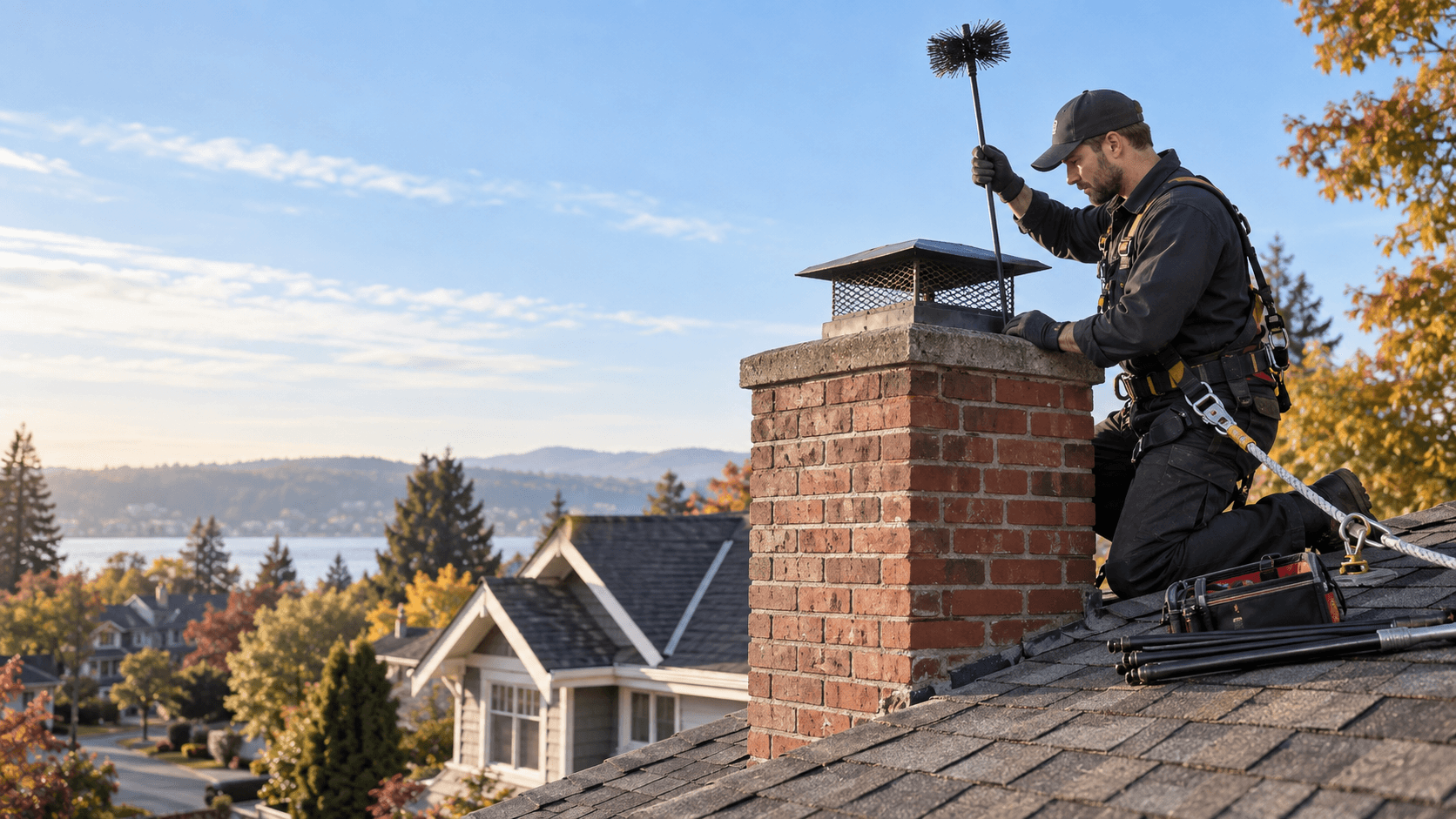
Dark deposits accumulate quickly on glass, appliance surfaces or within the venting path.
AI-generated editorial image; it does not diagnose a real property.Use decision
A roaring chimney, extreme heat, sparks or dense smoke can indicate a chimney fire. Leave the building, call emergency services and do not reuse the system until appropriately inspected.
Not a diagnosis
Conditions a professional may investigate
Wet fuel or prolonged low-temperature burning
Restricted combustion air or poor appliance operation
A venting or draft problem
An appliance fault or unsuitable fuel
Build a timeline
What to document safely
Fuel species and measured moisture if available
Burn duration, air settings and loading pattern
Deposit appearance and location
Service history and appliance model
A sensible sequence
Next steps
1
Stop use after suspected chimney fire or abnormal heating.
2
Arrange inspection and cleaning based on deposit condition.
3
Review fuel and operating practices against manufacturer guidance.
4
Investigate why deposits formed unusually quickly.
Possible service path
Chimney Sweeping and Cleaning
Routine removal of soot, accessible creosote and debris from the venting path.
What causes excessive soot or rapid deposit buildup?
Several conditions can produce the same observation. An on-site assessment should test plausible causes and document limitations before a repair is selected.
Can I keep using the fireplace or appliance?
A roaring chimney, extreme heat, sparks or dense smoke can indicate a chimney fire. Leave the building, call emergency services and do not reuse the system until appropriately inspected.
What should I photograph or record?
Fuel species and measured moisture if available Burn duration, air settings and loading pattern Deposit appearance and location Service history and appliance model
What type of company should I contact?
Look for a company with relevant experience in chimney sweeping and cleaning and your appliance type. Confirm services, qualifications and current insurance directly.