Homeowner service scope
Chimney Inspections
An inspection should answer a stated question: routine continued use, a property transfer, an appliance change, a chimney fire, storm damage or an unexplained symptom. The event helps determine the appropriate access and documentation.
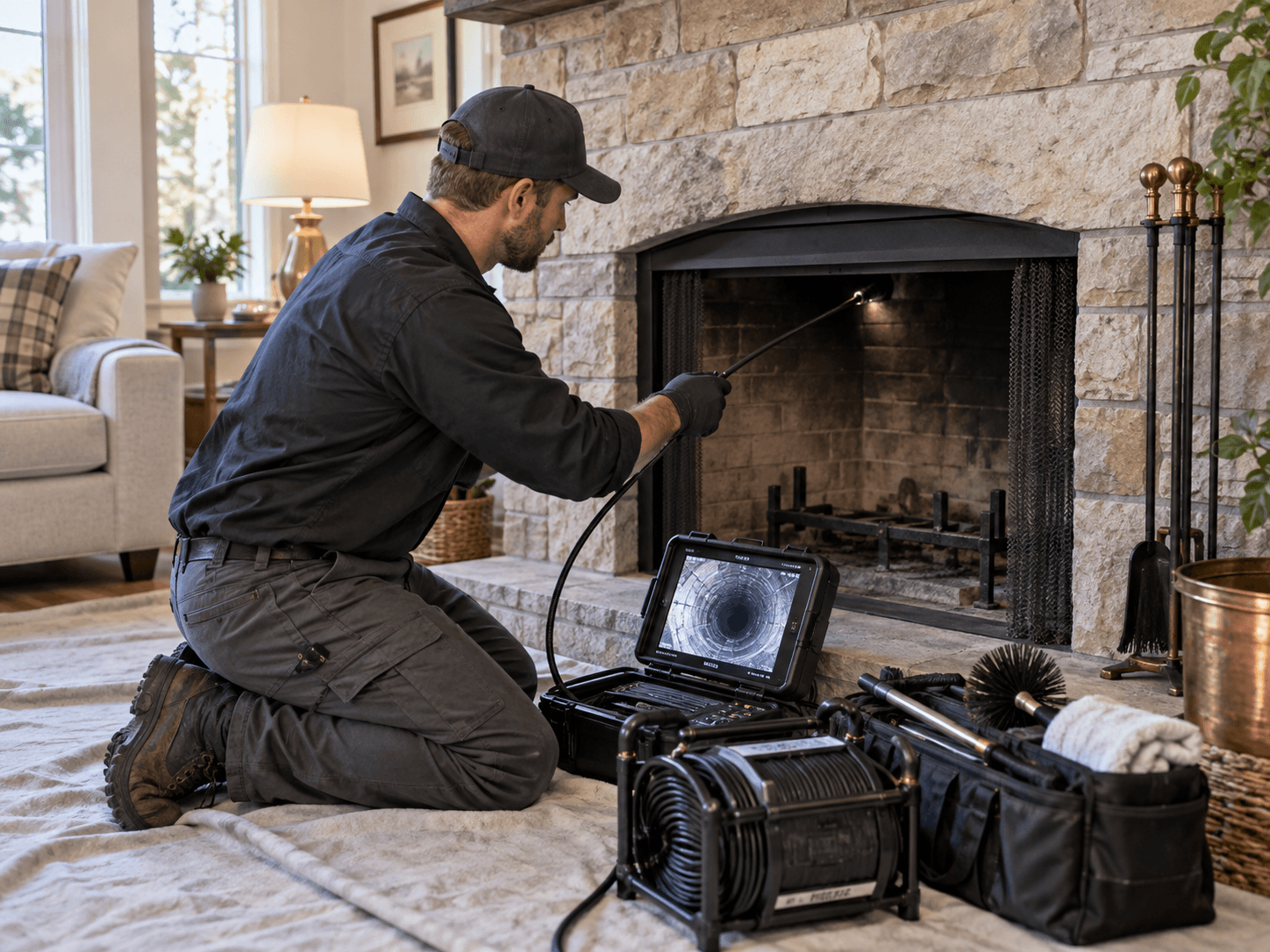
When it may be relevant
Reasons to discuss this service
- Before seasonal use or after a long idle period.
- After a property transfer, appliance change or known chimney fire.
- When water, smoke, odor, debris or damage is observed.
- Before authorizing a substantial repair proposal.
These are conversation starters, not a remote diagnosis. The same observation may support a different service once the appliance, venting system and site conditions are examined.
Written scope
What a clear proposal should address
- 1
Identify the appliance and venting system being evaluated.
- 2
Examine components included in the agreed inspection level.
- 3
Record access limitations instead of implying concealed areas were seen.
- 4
Separate observations, urgency and recommended next steps.
Before hiring
Questions for the chimney professional
- Why is this inspection level appropriate?
- Will the flue be camera-scanned?
- Which areas are excluded or inaccessible?
- Will the report include labeled photographs?
Also verify current insurance, applicable licensing or registration, relevant training, permits and warranty terms directly. A directory profile is not verification.
An inspection is limited by its agreed level, access and conditions on the day; it is not a guarantee of future performance.
For an active fire, carbon-monoxide alarm, rapidly filling smoke or immediate danger, leave the building and contact emergency services.