Homeowner service scope
Flue Repair
“Flue repair” can refer to joints, tiles, metal vent sections, connectors or a complete lining system. Require the estimate to name the component, location and failure rather than rely on the broad phrase.
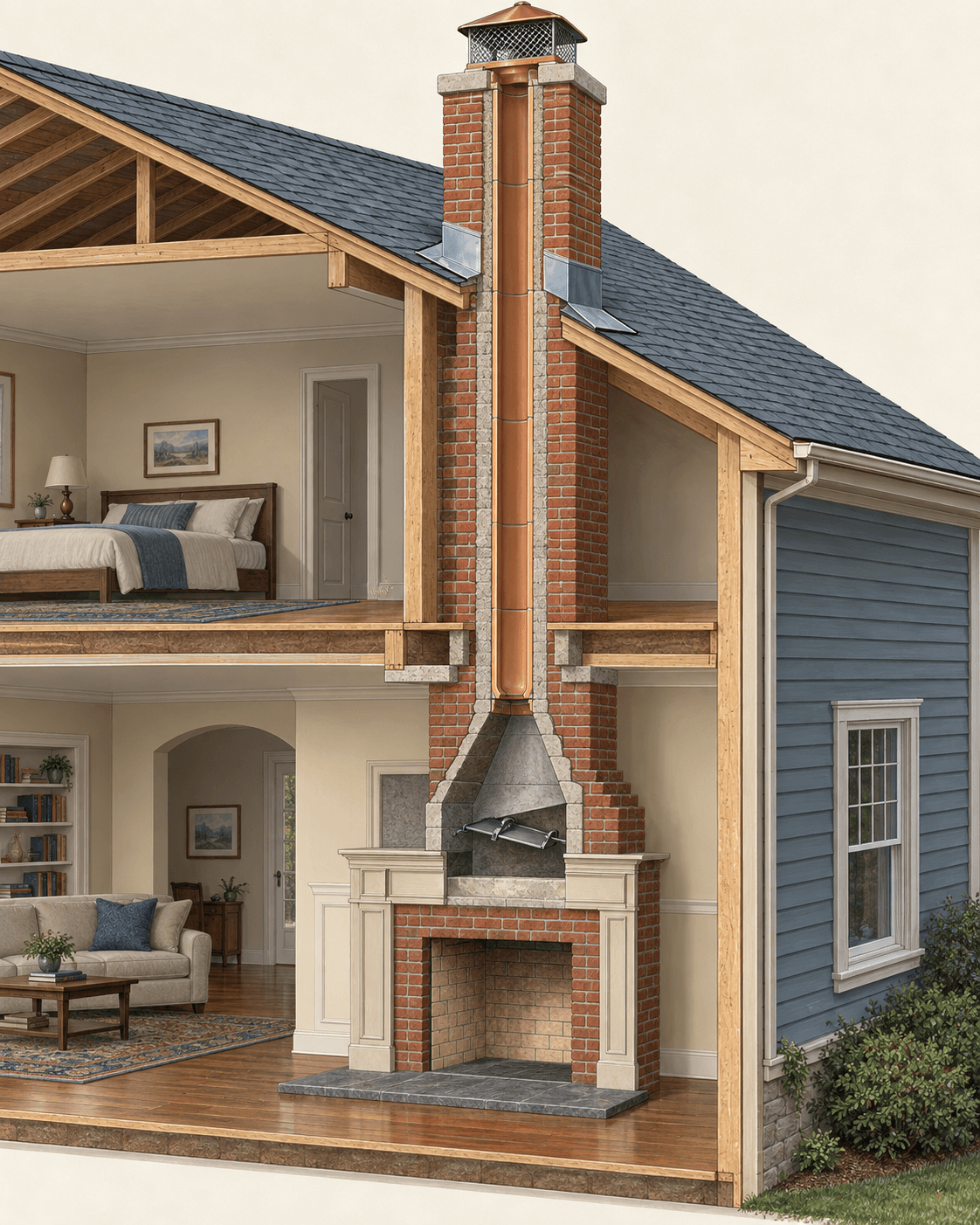
When it may be relevant
Reasons to discuss this service
- Video shows displaced joints, cracks or missing material.
- Metal sections are corroded, loose or incompatible.
- Debris from a liner appears in the firebox or cleanout.
- Draft or moisture issues prompt a documented flue finding.
These are conversation starters, not a remote diagnosis. The same observation may support a different service once the appliance, venting system and site conditions are examined.
Written scope
What a clear proposal should address
- 1
Locate and document the affected flue component.
- 2
Relate the defect to the appliance and operating conditions.
- 3
Compare targeted repair with relining when both are plausible.
- 4
Define access, materials, cure time and return-to-use conditions.
Before hiring
Questions for the chimney professional
- Which component and elevation are affected?
- Can it be repaired locally or does access prevent that?
- What standard or manufacturer instruction applies?
- When can the appliance be used again?
Also verify current insurance, applicable licensing or registration, relevant training, permits and warranty terms directly. A directory profile is not verification.
Poor draft alone does not prove the flue needs repair; draft depends on the appliance, building and weather as well as the chimney.
For an active fire, carbon-monoxide alarm, rapidly filling smoke or immediate danger, leave the building and contact emergency services.