Homeowner service scope
Chimney Liner Inspection and Repair
Liner work should begin with a documented defect and the appliance’s venting requirements. Clay, metal and cast-in-place approaches are not interchangeable solutions.
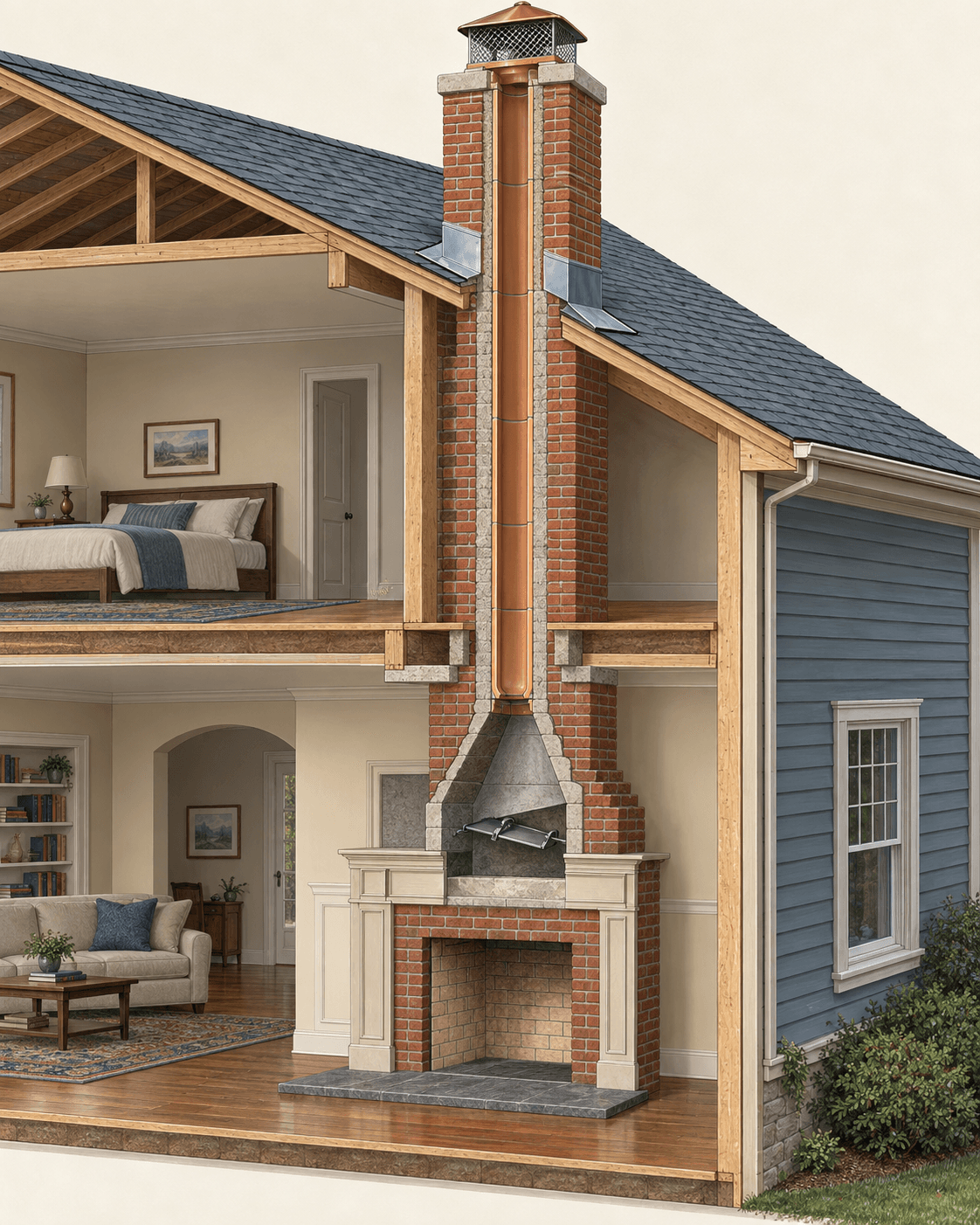
When it may be relevant
Reasons to discuss this service
- A camera inspection documents gaps or deterioration.
- An appliance change alters venting requirements.
- Corrosion, condensation or tile debris is observed.
- A chimney fire or major event may have affected the flue.
These are conversation starters, not a remote diagnosis. The same observation may support a different service once the appliance, venting system and site conditions are examined.
Written scope
What a clear proposal should address
- 1
Identify the appliance, fuel, input and existing flue.
- 2
Document cracks, gaps, corrosion, sizing or compatibility concerns.
- 3
Explain repair, resurfacing or relining options and limitations.
- 4
Specify dimensions, material, insulation, permits and final verification.
Before hiring
Questions for the chimney professional
- Where is the defect shown in the report?
- What sizing calculation supports the proposal?
- Is the system listed for this application?
- How is the completed work verified?
Also verify current insurance, applicable licensing or registration, relevant training, permits and warranty terms directly. A directory profile is not verification.
A liner proposal without appliance data, dimensions and documented conditions is difficult to evaluate responsibly.
For an active fire, carbon-monoxide alarm, rapidly filling smoke or immediate danger, leave the building and contact emergency services.